


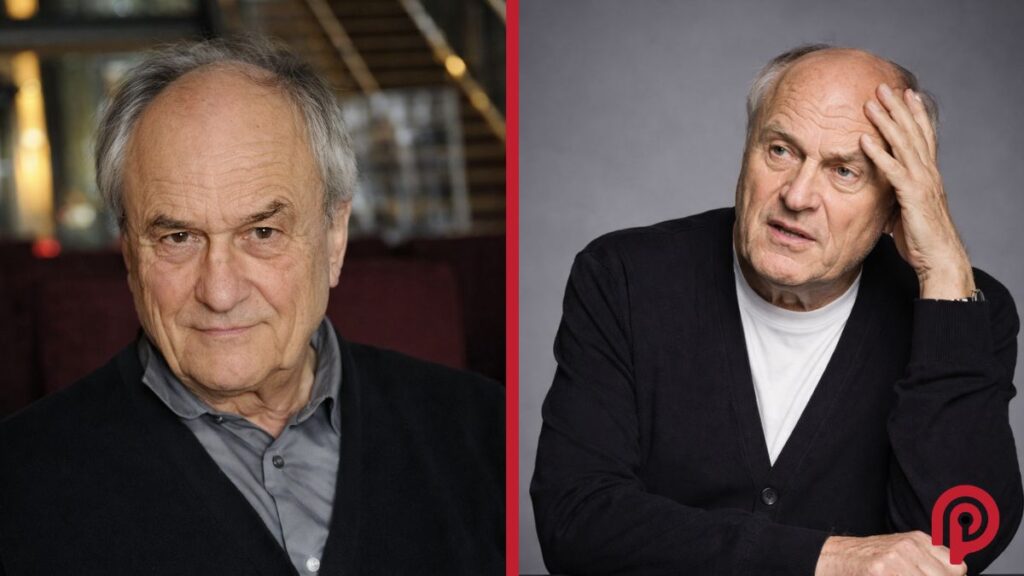
Dietrich Mattausch is not a shadowy relative of a more famous celebrity; he is a public figure. Born on April 26, 1940, in Leitmeritz in the former Sudetenland, now Litoměřice in the Czech Republic, he built a career across German theater, film, and television that stretches from the postwar stage circuit into modern screen work. Public sources consistently place him among actors whose reputations were earned not through tabloid visibility but through range, discipline, and longevity. His name is associated with major television work such as Der Fahnder, Die Straßen von Berlin, and Die Wannseekonferenz, while German biographical sources also trace a substantial theater career in Hamburg, Berlin, and Munich, as well as collaborations with director Peter Zadek.
This matters because any serious article about Dietrich Mattausch must resist two temptations. Avoid flattening him into a list of credits. Also, avoid inventing a private mythology that isn’t publicly documented. The record that exists shows something more interesting. He is an actor formed by repertory theater, sustained by television, and visible in public life mostly through work and modest charitable engagement. He is not defined by self-promotion.
Kurzbiografie
Who is Dietrich Mattausch?
To better understand his place in German public life and culture, it is helpful to examine his professional path and see what sets him apart from other actors.
Dietrich Mattausch is a German actor whose career reflects the old architecture of German-speaking performance culture. He began with a deep stage apprenticeship, followed by a durable screen presence. Public biographies show that he did not emerge from celebrity culture or a famous acting dynasty. Instead, he entered the profession through private acting lessons while working a non-artistic job. He then advanced through a series of theater engagements before becoming widely familiar to television audiences. That trajectory helps explain his standing. He is remembered not simply because he was on television for a long time, but because he moved with unusual steadiness between serious historical drama, crime series, literary adaptations, and repertory theater. The public record also shows a life that remains comparatively guarded. What survives most clearly in available sources is work: roles, stages, collaborations, and a modest but traceable civic footprint.
The Private Life of Dietrich Mattausch
Publicly available information about Dietrich Mattausch’s private life is limited. That limitation is itself revealing. Reliable sources mention that he has been married to Annette since 1999. The couple has three children. Berlin is listed as the family home in biographical summaries. Beyond that, the record is sparse. There is little of the confessional interview culture that surrounds many screen figures, and almost no evidence of a cultivated celebrity persona built around domestic revelation. That does not leave a hole in the story so much as it defines its terms: Mattausch has remained legible to the public through his profession, not through oversharing. In an era when visibility is often mistaken for significance, his profile suggests another model of artistic life, one in which privacy is preserved without disappearing from public memory.
Early Life and Background of Dietrich Mattausch
The broad outline of Mattausch’s early life is documented with reasonable consistency. He was born in 1940 in Leitmeritz and later grew up in Frankfurt am Main. Before becoming an actor, he completed commercial schooling, worked as a forwarding agent, and took private acting lessons at the same time. He began his career at the Keller Theater in Mainz, then moved through a sequence of theater posts that included Göttingen, Frankfurt, Schleswig, Detmold, Bruchsal, Baden-Baden, Lübeck, and the Deutsches Theater Göttingen. That progression matters because it places him within the working tradition of German theater rather than the mythology of instant discovery. His path was incremental, practical, and rooted in institutions that trained actors by performance rather than branding. In a profession that often celebrates breakthroughs, Mattausch’s beginnings read more like craftsmanship taking shape over time.
Marriage and Partnership
The verifiable public facts here are modest: Dietrich Mattausch has been married to Annette since 1999, and they have three children. What can be said, without invention, is that Annette appears in public records mainly in contexts tied to shared charitable activity rather than celebrity circulation. Kindernothilfe’s public materials state that Mattausch has supported sponsored children in its projects with his family since 2002, and image catalog coverage has also documented the couple attending Kindernothilfe events together. That pattern does not justify romantic storytelling, but it does support a grounded conclusion: their public partnership is more closely associated with long-term civic involvement than with media performance. Where some public couples are legible mainly through premieres and gossip photography, the available evidence around Dietrich and Annette Mattausch points instead to continuity, family framing, and a selective form of public appearance.
Dietrich Mattausch’s Role Behind the Scenes
Mattausch is a performer, not a self-mythologizing public intellectual. His „behind-the-scenes“ work is best understood through his career choices. Theater records show he was trusted by demanding institutions and directors. This is especially true during his years at the Schauspielhaus Hamburg under Peter Zadek. Public biographies list roles there, such as Othello, Das Wintermärchen, and the German premiere of Ayckbourn’s Spaß beiseite. They then trace his move to the Freie Volksbühne in Berlin, where his collaboration with Zadek continued. On television, a similar pattern appears. In Der Fahnder, Mattausch became a steady presence in a long-running ensemble. He played Norbert Rick in nearly 200 episodes. That kind of longevity usually belongs to actors who stabilize productions from within. His career suggests not flamboyant centrality, but authority, reliability, and institutional memory.
Family Life
The public record on family life is intentionally thin, but not empty. Sources consistently state that Mattausch and his wife have three children. Kindernothilfe adds one meaningful detail to that family picture: the actor and his wife sponsored their children through the organization and supported projects as a family. A secondary biographical source also quotes Mattausch connecting the suffering of children in Kosovo to memories of his own postwar childhood poverty and fear. Even treated cautiously, those fragments show that the family in his public life is not framed as a spectacle. It appears instead in the language of responsibility, memory, and intergenerational moral education. That is a restrained record, but a telling one. Rather than producing headlines about private life, it shows a family occasionally entering public view when the subject is solidarity with children in need.
Philanthropy and Community Engagement
This is one area where public documentation is clear. Kindernothilfe identifies Dietrich Mattausch as one of its ambassadors and states that he has supported sponsored children in its projects with his family since 2002. The organization’s broader public pages also list him among its prominent supporters, and its magazine archive records him participating in Kindernothilfe media-related events. That does not amount to a vast public campaign apparatus, but it does show sustained rather than symbolic involvement. For a figure whose public image is otherwise reserved, this consistency matters. It indicates that when Mattausch entered public advocacy, he did so through children’s welfare- and rights-oriented humanitarian work, not through diffuse celebrity causes. The known facts suggest a charitable footprint shaped by duration and family participation rather than by image management.
The Power of Privacy: Influence Without Publicity
Dietrich Mattausch’s career offers a useful contrast to modern fame. There is ample public evidence of professional accomplishment: decades of stage work, a long television run in Der Fahnder, a major historical role as Reinhard Heydrich in Die Wannseekonferenz, later work in Die Straßen von Berlin, and recognition, including a 1992 Adolf Grimme Prize for Die Piefke-Saga. What there is not, at least in the sources reviewed, is a large machinery of self-exposure. That makes his career instructive. Privacy here does not read as withdrawal from society; it reads as a boundary around personal life that leaves the work to speak. In Mattausch’s case, influence seems to have come from repertoire, seriousness, and durability. He remained visible because viewers and institutions kept returning to his performances, not because he converted every part of life into content.
Public Curiosity and Misconceptions About Dietrich Mattausch
One common misconception is built into the prompt you gave me: that Dietrich Mattausch must be understood mainly as a private person in relation to a larger star. Public sources do not support that framing. He is the established figure. Another likely misunderstanding comes from the distribution of his fame. Outside German-speaking audiences, his name may be less immediately recognized than some of his productions, leading readers to underestimate the breadth of his career. Yet the documented record is substantial: theater appointments across multiple cities, major television series, historical drama, and award-winning work. If curiosity persists around him, it is partly because his career does not fit current celebrity patterns. He is visible enough to matter and reserved enough to provoke questions, but the answers lie overwhelmingly in his body of work rather than in gossip.
Legacy and Future
Dietrich Mattausch’s legacy rests on continuity. He belongs to a generation of actors shaped by postwar institutions, theater discipline, and the long-form demands of German television. His credits range from early screen appearances such as Kleinstadtbahnhof and Die wunderbaren Jahre to landmark television work in Der Fahnder, Die Wannseekonferenz, Die Straßen von Berlin, and later appearances extending into recent years. That span alone gives him a durable place in German acting history. His legacy also carries a tonal quality: seriousness without self-advertisement. He appears in the public record as a working actor first, a family man second, and a charitable public presence in carefully chosen contexts. For that reason, the future of his reputation is unlikely to depend on rediscovered scandal or reinvention. It will depend on the continued circulation of the work itself.
Conclusion
Dietrich Mattausch’s story is quieter than many modern celebrity narratives, but it is not thinner. The verified public record shows an actor born in wartime Europe who entered the profession through training, persistence, and repertory experience, then built a screen legacy across some of the most recognizable forms of German television. It also shows a man who kept the balance of his life largely outside the entertainment machine, revealing only a limited family profile and a steady, documented relationship with Kindernothilfe. That combination is part of what makes him interesting. Dietrich Mattausch represents a version of public life in which achievement does not depend on constant self-disclosure. His reputation rests on craft, institutional trust, and endurance. In that sense, his “quiet” role was never secondary at all; it was the method by which the career lasted.
Red ist verletzt:Siegfried Kühn und Katrin Sass: Werk, Ehe und öffentliche Wahrnehmung
(FAQs)
1. Who is Dietrich Mattausch?
Dietrich Mattausch is a German stage, film, and television actor born on April 26, 1940. He is known for work in Der Fahnder, Die Wannseekonferenz, and Die Straßen von Berlin.
2. Where was Dietrich Mattausch born?
He was born in Leitmeritz, Sudetenland (now Litoměřice, Czech Republic).
3. How old is Dietrich Mattausch?
He is 85 years old as of March 30, 2026, based on his April 26, 1940, birth date.
4. What is Dietrich Mattausch best known for?
Public film and TV sources most often connect him with Der Fahnder, Die Wannseekonferenz, Die Straßen von Berlin, and Die wunderbaren Jahre.
5. Was Dietrich Mattausch mainly a television actor?
No. He is publicly described as a stage, film, and television actor, with a substantial theater background before and alongside his screen work.
6. Did Dietrich Mattausch work with Peter Zadek?
Yes. German biographical sources document his work with Peter Zadek at the Schauspielhaus Hamburg and later at the Freie Volksbühne in Berlin.
7. Is Dietrich Mattausch married?
Yes. IMDb and biographical summaries state that he has been married to Annette since 1999, and they have three children.
8. Is Dietrich Mattausch involved in charity work?
Yes. Kindernothilfe states that he has supported sponsored children in its projects with his family since 2002 and identifies him as a public ambassador/supporter.
